
Crop Protection Know-How · MERI Machinery
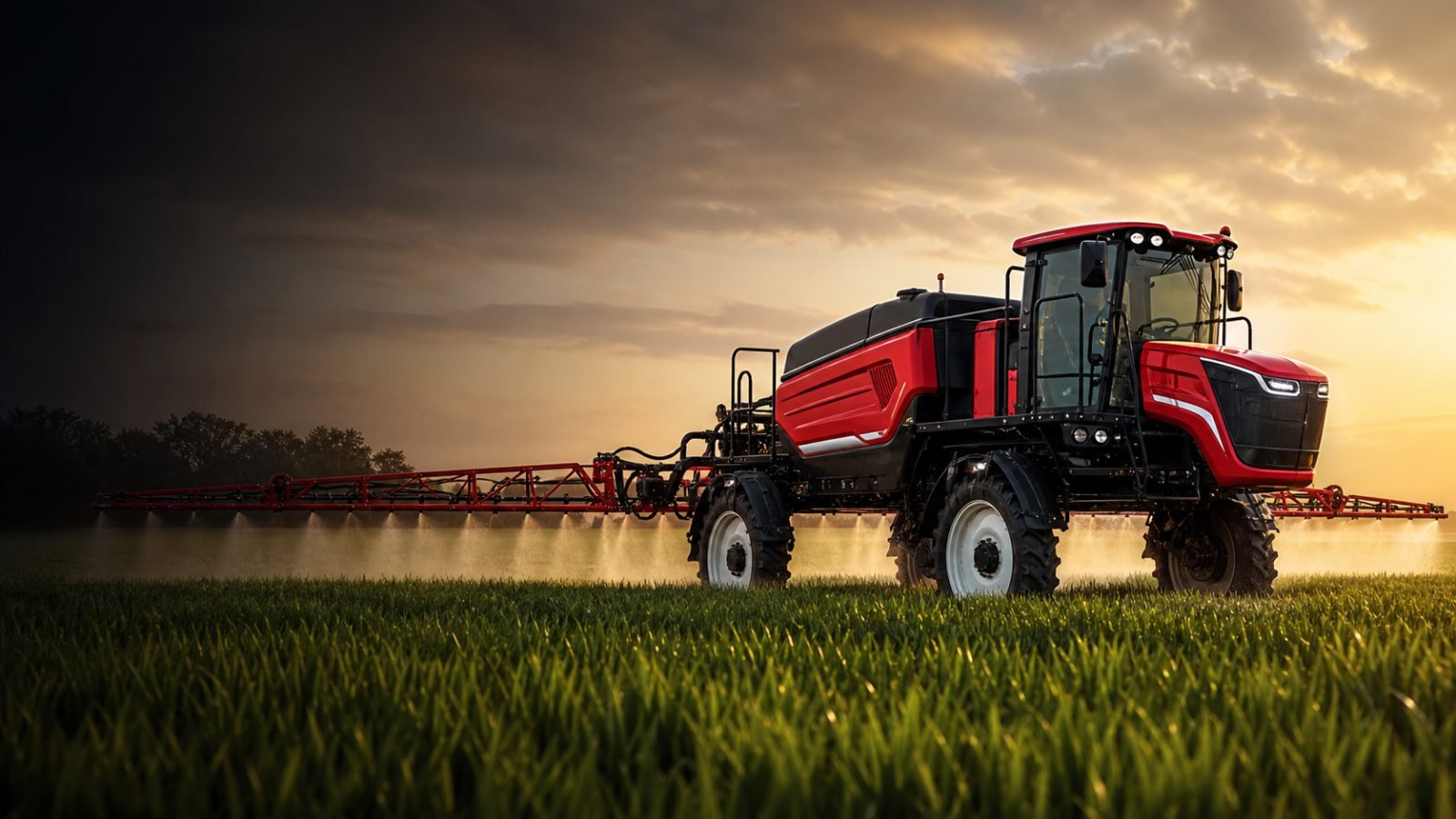
Sprayer output depends on nozzle flow, number of active nozzles, working width and travel speed. Calibration verifies that the actual machine delivers the intended application rate consistently and identifies worn or blocked nozzles before field work.
Relevant MERI Equipment and Resources
700 L self-propelled boom sprayer
700A self-propelled boom sprayer
G4 configuration boom sprayer
Compact self-propelled sprayer
Technical Points to Confirm
| Application target | Use the approved product label and local agronomic requirements to establish application rate and droplet objective. |
|---|---|
| Nozzle output | Collect and compare actual nozzle flow at the intended pressure; replace blocked, damaged or excessively worn nozzles. |
| Travel speed | Measure real field speed under operating load because wheel slip and terrain can differ from dashboard assumptions. |
| Boom setup | Check height, leveling, section control, spacing and overlap against crop and nozzle recommendations. |
| Cleaning and safety | Follow formulation instructions, operator protection, rinsing, waste handling and controlled-access requirements. |
Information to Include with an Inquiry
- Crop and approved formulation
- Target application rate
- Nozzle type and spacing
- Working pressure and speed
- Boom width and section layout
- Field area, terrain and refill plan
Request an Application-Based Recommendation
Review the related MERI guide, then send your application, site conditions, configuration requirements and destination through the technical quotation form.
This page supports preliminary selection. Final specifications, capacity, compatibility, service intervals and destination documentation are confirmed for the selected machine and configuration.