
Orchard & Vineyard Machinery Solutions
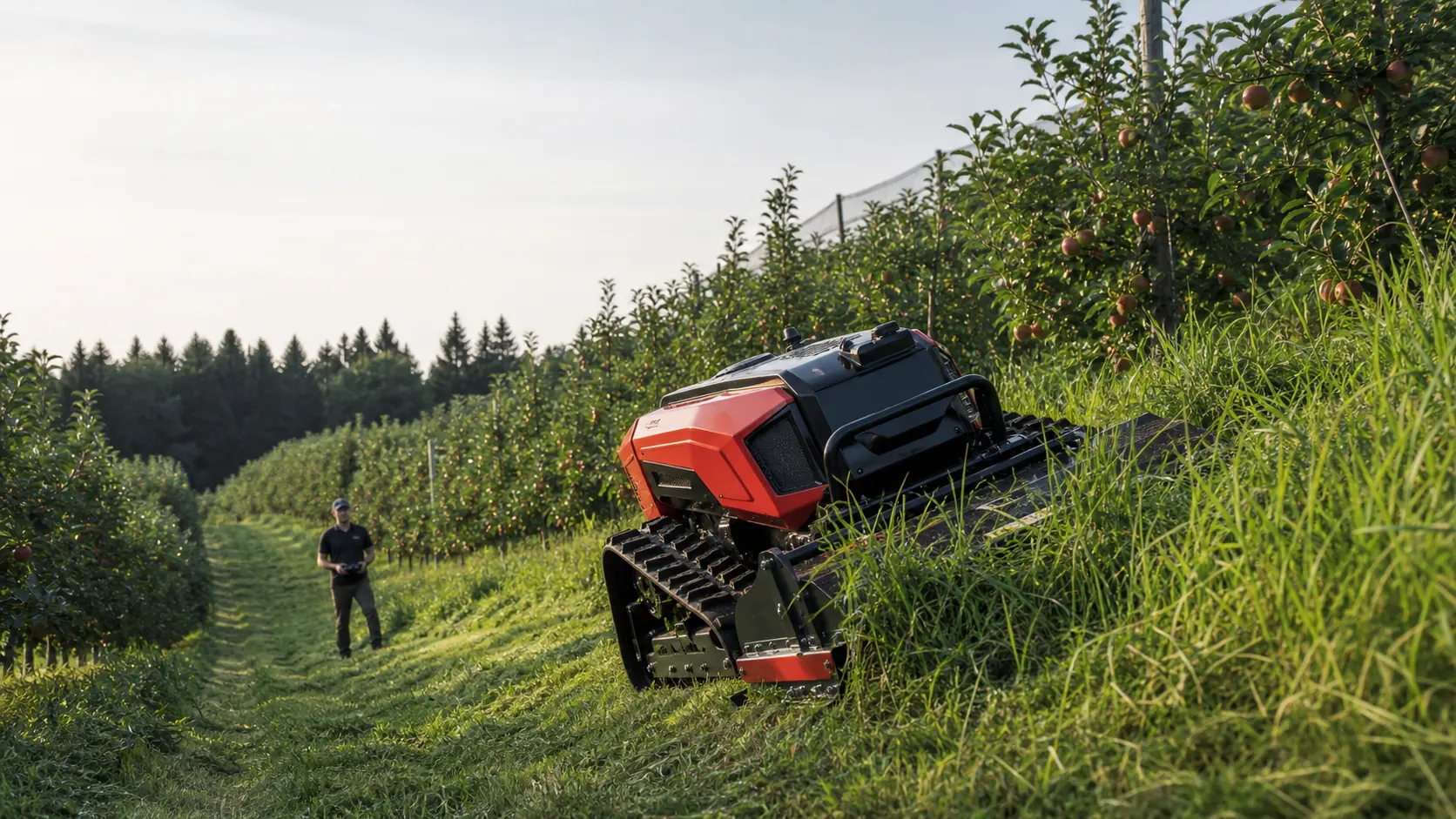
Narrow rows, low branches, uneven soil and seasonal operations require careful machine sizing.
Recommended Equipment
Compact loaders, power tillers, rotary tillers, sprayers and specialized MERI MOW remote mowing equipment.
Selection Process
- Measure row width and clearance
- Review soil and slope
- Define spraying or tillage task
- Confirm machine dimensions
- Match attachments and controls
Request an Application-Based Recommendation
Send working conditions, capacity, dimensions, attachments, destination and quantity. Recommendations remain subject to final technical confirmation.
Browse equipment · Discuss your application
Request a Model Recommendation
Share your application, capacity, working conditions, destination country and expected quantity. Contact MERI for configuration and quotation →
Plan the Complete Equipment System
Orchard and vineyard equipment must fit a three-dimensional operating envelope. Row width, canopy and trellis clearance, headland space, cross-slope, wet ground and seasonal work all affect machine and attachment selection.
Application and Equipment Matrix
| Work requirement | Relevant equipment | Critical selection inputs |
|---|---|---|
| Row and estate handling | Compact loaders | Narrowest clearance, turning radius, lift height, ground pressure and tool width |
| Vegetation on slopes | Remote-controlled equipment | Measured slope, traction, cutting width, vegetation density and projectile zone |
| Under-row soil work | Tillage equipment | Root-zone protection, soil, width, depth, irrigation and pass strategy |
| Crop protection | Spraying equipment | Canopy geometry, coverage target, tank, pump, nozzle, terrain and refill plan |
From Requirement to Delivery
Information to Send MERI
- Minimum row, gate, canopy and trellis clearances
- Headland length and turning restrictions
- Typical and maximum gradients
- Soil, vegetation and wet-season conditions
- Crop geometry and application objective
- Seasonal task calendar and transport requirements
Frequently Asked Questions
How much width clearance should be allowed?
Allow operating and steering margin beyond machine width; the required margin depends on row straightness, canopy, slope and visibility.
Why are headland measurements important?
A machine may fit the row but still be unable to turn safely or align with the next row.
Can remote machinery work on every orchard slope?
No. Stability, traction, obstacles and the documented operating limits of the confirmed machine must all be assessed.
Build an Application-Based Configuration
Send your site information and task requirements. Request a technical quotation or compare the full MERI product range.
Orchard and Vineyard Application Resources
Coordinate equipment width, canopy, headland, slope, soil work and crop-protection requirements.
Technical Library
Buyer Guides & Application Resources
Use these practical guides to compare configurations, prepare an RFQ and plan operation or maintenance.