
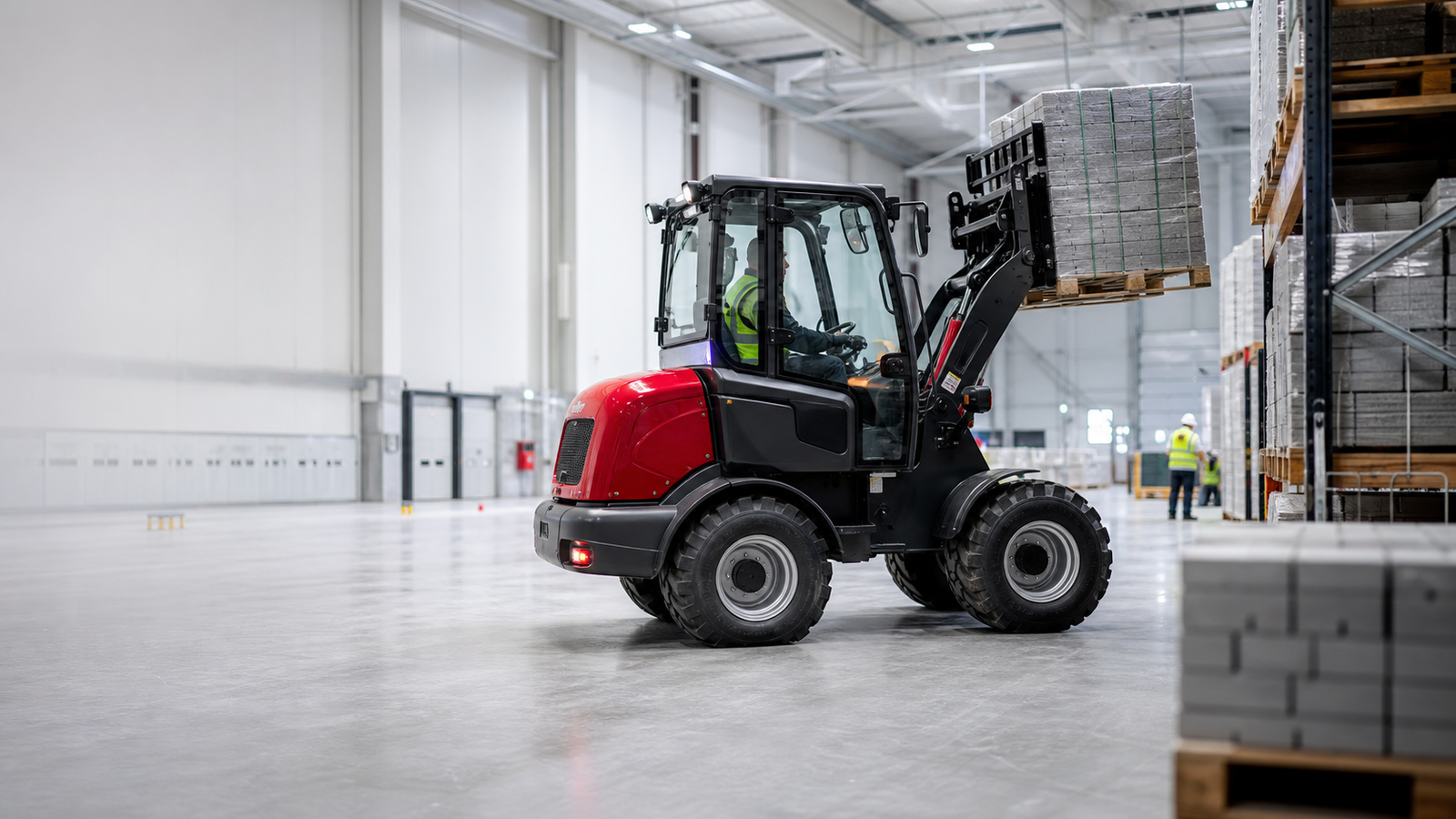
Electric Loader Charging Site and Daily Energy Planning
Electric loader productivity depends on the complete energy plan, not battery capacity alone. Duty intensity, hydraulic use, travel, temperature, charging power, break windows and battery reserve determine whether one machine can complete the intended shift.
Why this decision matters
Published maximum values describe only part of the application. Real performance changes with material, terrain, operator method, attachment, environment and duty cycle. Use one written application brief so competing quotations are technically comparable.
Information to confirm
| Working and idle time per shift | Record the actual operating condition and confirm it against the selected machine, attachment and supplier documentation. |
|---|---|
| Travel distance and hydraulic intensity | Record the actual operating condition and confirm it against the selected machine, attachment and supplier documentation. |
| Ambient and battery temperature | Record the actual operating condition and confirm it against the selected machine, attachment and supplier documentation. |
| Available charger input and connector | Record the actual operating condition and confirm it against the selected machine, attachment and supplier documentation. |
| Charging windows and operational reserve | Record the actual operating condition and confirm it against the selected machine, attachment and supplier documentation. |
| Battery care and site electrical safety | Record the actual operating condition and confirm it against the selected machine, attachment and supplier documentation. |
Recommended evaluation workflow
- Describe the real job and the most demanding operating condition.
- Record measurable limits instead of using general terms such as heavy duty.
- Compare each proposed model against the same application brief.
- Identify assumptions, exclusions and optional equipment in writing.
- Confirm the final configuration before production and inspection.
- Retain the approved specification with service and parts records.
RFQ checklist
- Working and idle time per shift
- Travel distance and hydraulic intensity
- Ambient and battery temperature
- Available charger input and connector
- Charging windows and operational reserve
- Battery care and site electrical safety
Frequently asked questions
Can battery capacity alone predict runtime?
Not by itself. The answer depends on the confirmed machine configuration, operating condition and limits in the applicable technical documentation.
Is opportunity charging useful?
Not by itself. The answer depends on the confirmed machine configuration, operating condition and limits in the applicable technical documentation.
What site information is needed before charger selection?
It affects application accuracy, productivity or machine loading and should be included in the technical review before final selection.