
Soil Preparation · MERI Buyer Resource
Power Tiller and Rotary Tiller Selection Guide
Working width is visible in a catalog, but soil condition determines the power and traction required. Clay, dry compacted ground, stones, roots, moisture and desired tilth all influence blade choice, working depth, travel speed and pass count.
Technical Factors to Compare
| Decision area | What to verify |
|---|---|
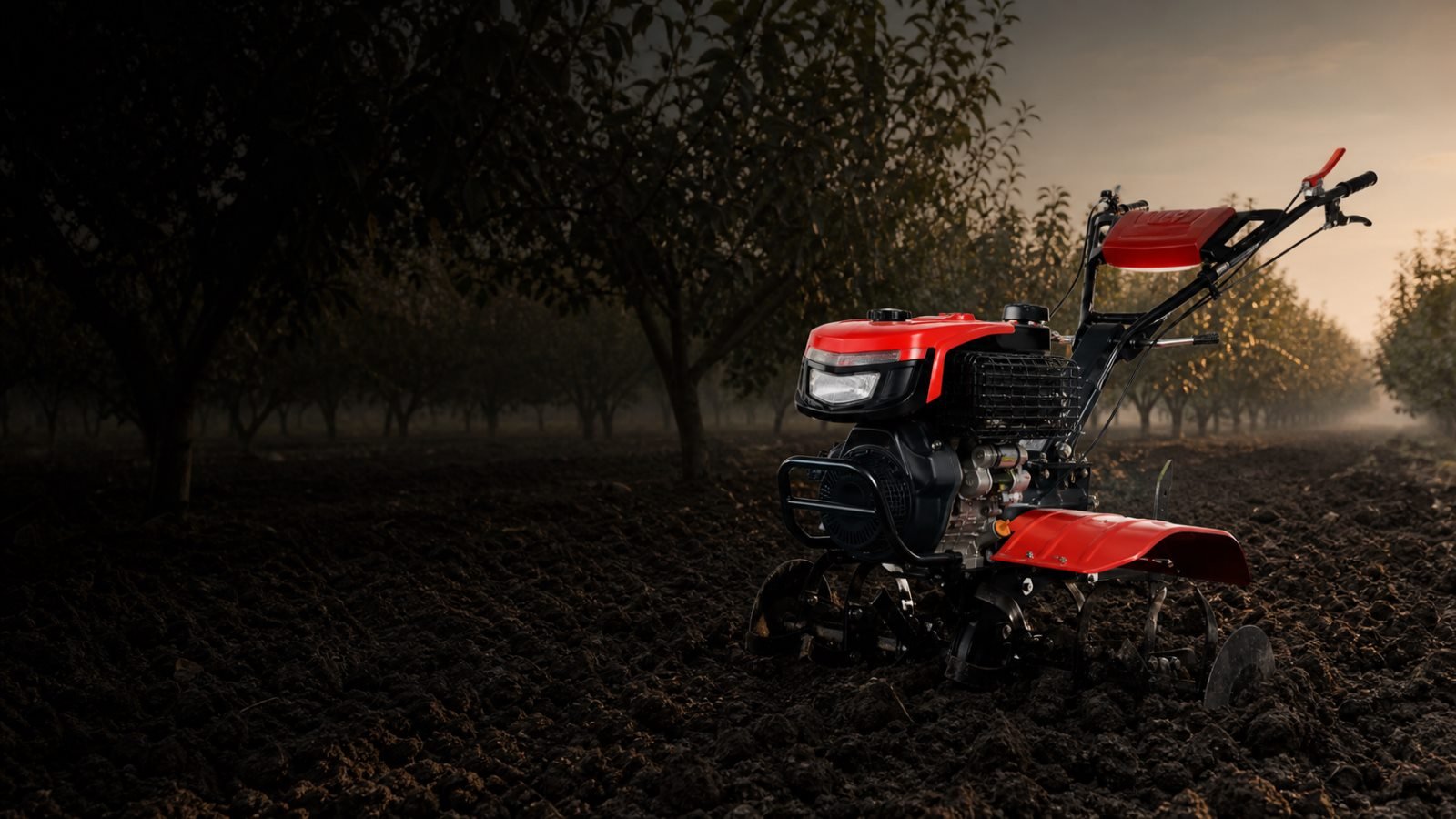
| Power tiller | Compact propulsion and implement system for gardens, orchards, small plots and restricted access, depending on configuration. |
| Rotary tiller | Selected around rotor width, blade arrangement, depth control, soil finish and compatibility with the carrier or power unit. |
| Soil condition | Record texture, compaction, moisture, stones, roots and previous crop residue before sizing the machine. |
| Working geometry | Confirm row width, headland space, gates, slope and any root-zone or irrigation restrictions. |
| Wear system | Blade material, mounting, replacement interval, seals and gearbox service access affect lifetime cost. |
Information to Send with an Inquiry
- Soil type, moisture and compaction
- Stone, root and residue level
- Required working width and depth
- Plot size, rows and turning space
- Slope and traction condition
- Desired finish and number of passes
- Blade, belt, seal and filter spare parts
Frequently Asked Questions
Should tillage be done at maximum depth in one pass?
Not necessarily. Soil, power, traction and agronomic goals may favor staged passes. Follow safe operating and local agronomic guidance.
Which is more important: horsepower or working width?
They must be matched with soil resistance, depth, rotor design, speed and traction; neither figure should be assessed alone.
What information helps a supplier recommend blades?
Soil texture, stones, roots, crop residue, desired finish, depth and expected annual area.
Get an Application-Based Recommendation
Send MERI your job description, loads, dimensions, site conditions, attachments and destination. Review the relevant equipment range or request a technical quotation.
Specifications and suitability depend on the confirmed model and configuration. This guide supports preliminary selection and does not replace the operating manual, load chart, risk assessment or local compliance review.