
Indoor & Zero-Emission Handling Machinery Solutions
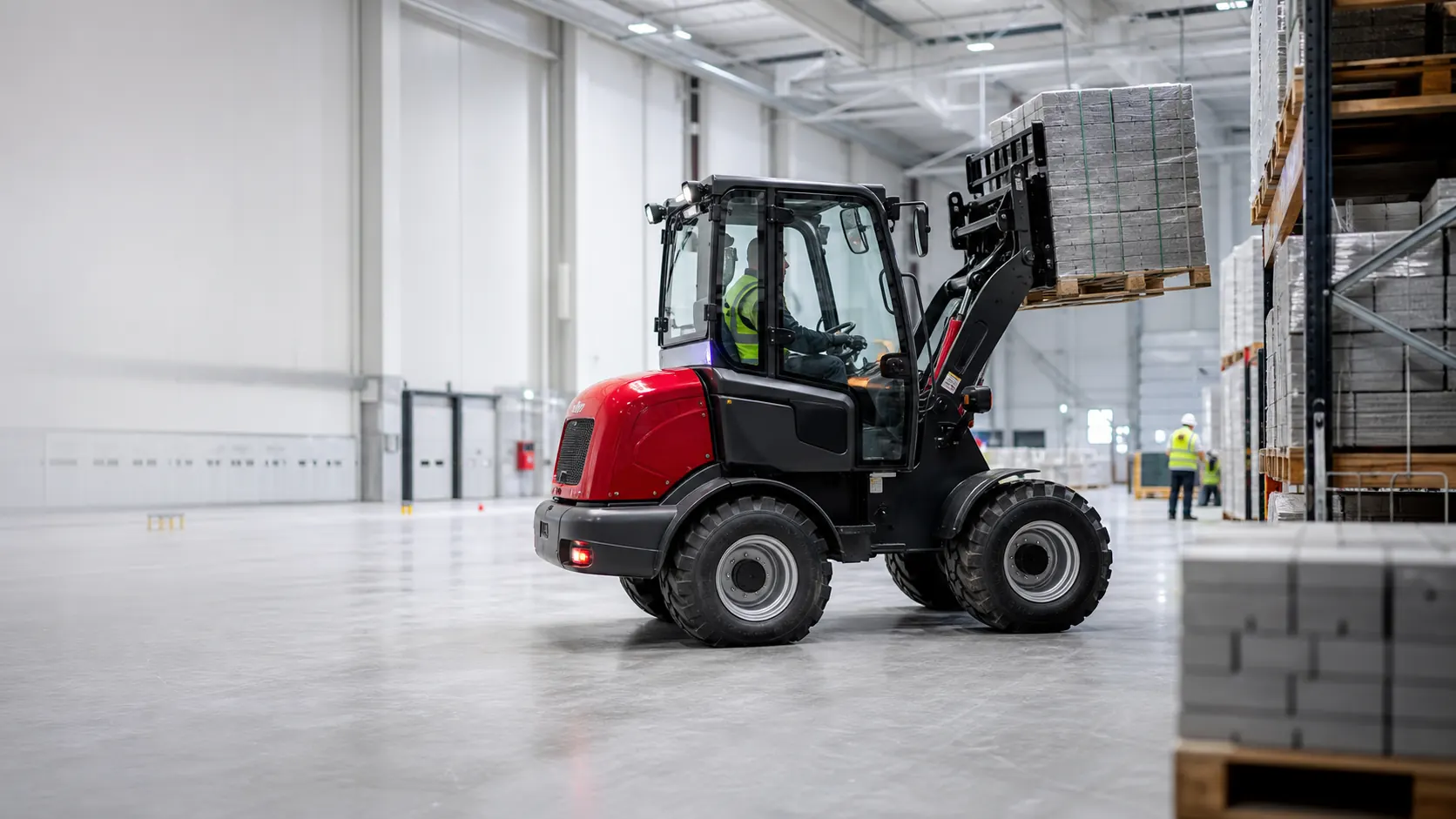
Enclosed areas may require low noise, no local exhaust emissions, compact dimensions and planned charging.
Recommended Equipment
ME-EL electric loader series with compatible buckets, forks and indoor attachments.
Selection Process
- Measure doors, aisles and floor limits
- Define load and lift requirements
- Estimate duty cycle
- Confirm charger supply
- Review hydraulic attachment demand
Request an Application-Based Recommendation
Send working conditions, capacity, dimensions, attachments, destination and quantity. Recommendations remain subject to final technical confirmation.
Browse equipment · Discuss your application
Request a Model Recommendation
Share your application, capacity, working conditions, destination country and expected quantity. Contact MERI for configuration and quotation →
Plan the Complete Equipment System
Indoor machinery should be selected as part of the building system. Ventilation, noise, aisle width, floor loading, overhead clearance, shift pattern, charging supply and emergency procedures all influence the correct equipment configuration.
Application and Equipment Matrix
| Work requirement | Relevant equipment | Critical selection inputs |
|---|---|---|
| Indoor bulk handling | Electric wheel loaders | Payload, material dust, aisle, floor, ventilation, lift geometry and runtime |
| Pallet and bin handling | Fork and loader configurations | Load center, lift height, fork length, turning radius and residual capacity |
| Charging system | Battery and charger | Duty cycle, charging window, voltage, phase, connector, temperature and contingency |
| Powered attachments | Sweeper or other hydraulic tools | Continuous flow, pressure, heat, energy consumption, dust and guarding |
From Requirement to Delivery
Information to Send MERI
- Building plan, aisle and door dimensions
- Floor capacity and surface condition
- Loads, lift heights and cycles per hour
- Shift duration and charging windows
- Electrical voltage, phase and connector
- Dust, ventilation, noise and temperature limits
Frequently Asked Questions
How long will an electric loader operate?
Runtime depends on battery configuration and measured duty cycle, including travel, lifting, gradients and hydraulic-tool use.
Can any industrial socket charge the loader?
No. Voltage, phase, frequency, connector and protective equipment must match the supplied charger and local electrical rules.
Why check floor loading?
Machine weight, payload, tire contact and dynamic movement must be compatible with the actual floor and operating route.
Build an Application-Based Configuration
Send your site information and task requirements. Request a technical quotation or compare the full MERI product range.