Agricultural Sprayer Nozzle Selection and Drift-Reduction Planning
Nozzle selection affects flow rate, droplet spectrum, coverage, drift potential and practical operating speed. A sprayer should be calibrated with the actual nozzle, pressure, spacing, boom height and field speed while following the formulation label and local application rules.
Key planning factors
The following points provide a structured starting point. Final selection and operating decisions should use the confirmed machine documentation, destination requirements and application-specific risk assessment.
| Application rate | Set the target volume per hectare from the approved label, crop, canopy and agronomic objective. |
|---|---|
| Nozzle flow | Match required flow per nozzle with travel speed and nozzle spacing; verify real output by collection testing. |
| Droplet strategy | Balance coverage and drift control using the approved nozzle class and operating pressure. |
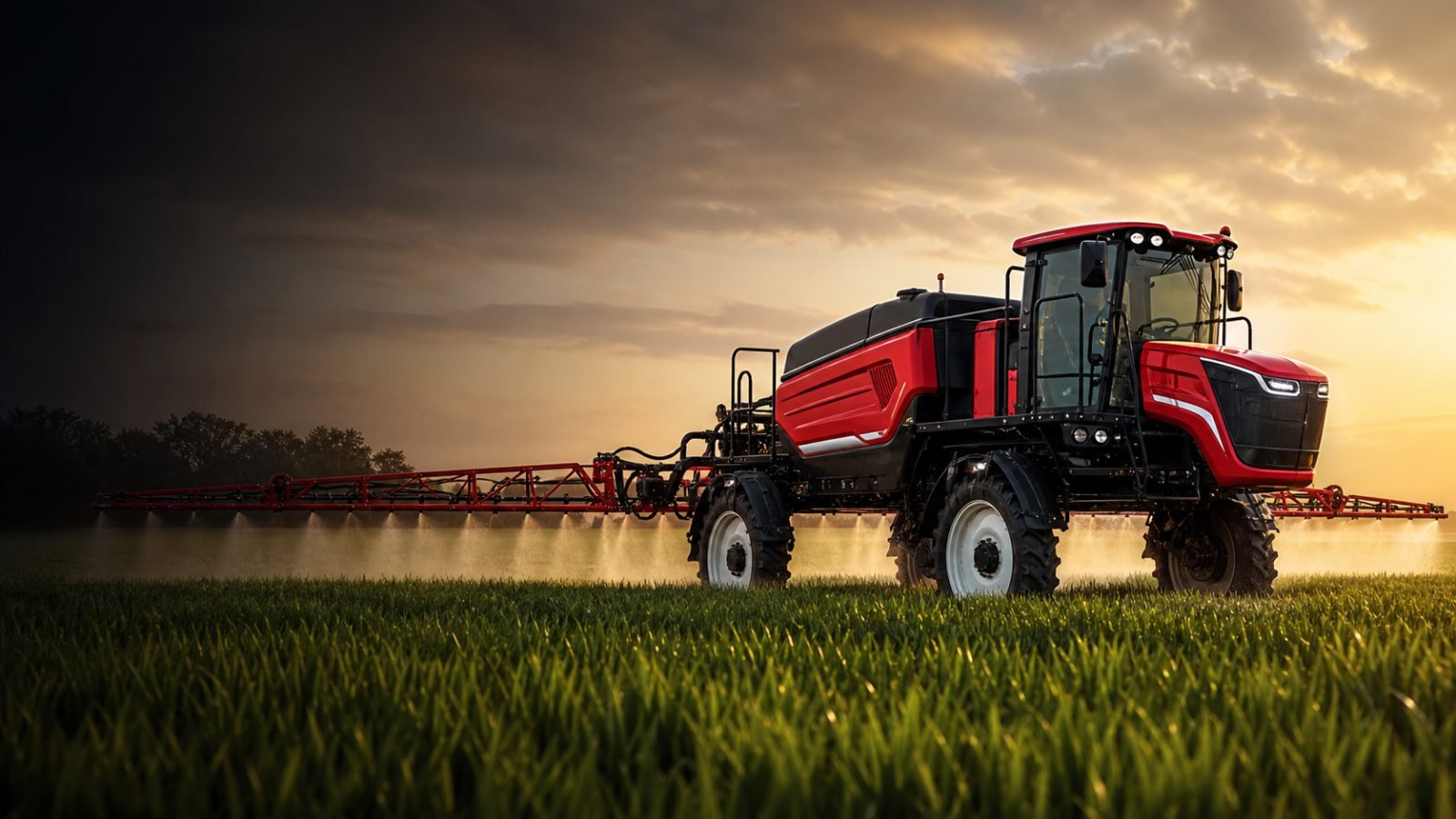
| Boom height | Keep the boom as low and stable as the nozzle pattern and crop allow to reduce drift and uneven overlap. |
| Weather window | Define wind, temperature, humidity and inversion limits according to local rules and product instructions. |
| Wear control | Compare nozzle outputs and replace worn, damaged or blocked units that fall outside the accepted variation. |
Recommended buyer workflow
- Confirm the crop, approved formulation, target rate and required droplet category.
- Calculate nozzle flow from working width, spacing and realistic field speed.
- Select a nozzle and pressure range that keeps operation away from unstable extremes.
- Measure actual travel speed and collected nozzle output with clean water.
- Check boom leveling, section operation, filters, agitation and return flow.
- Record calibration results and repeat checks when nozzles, pressure or speed change.
Questions buyers frequently ask
Does higher pressure always improve coverage?
No. Higher pressure changes flow and often creates finer droplets, which may increase drift. Use the approved nozzle operating range.
How often should sprayer calibration be checked?
Check before the season, after nozzle or component changes, and whenever output, pressure or field performance appears inconsistent.
Can different nozzle types be mixed across one boom?
Mixing can create uneven output and droplet behavior. Use a deliberately engineered arrangement and verify every section.
Explore Self-propelled boom sprayers, compare relevant models and send MERI your application details for configuration review.