
Compact Material Handling · MERI Machinery
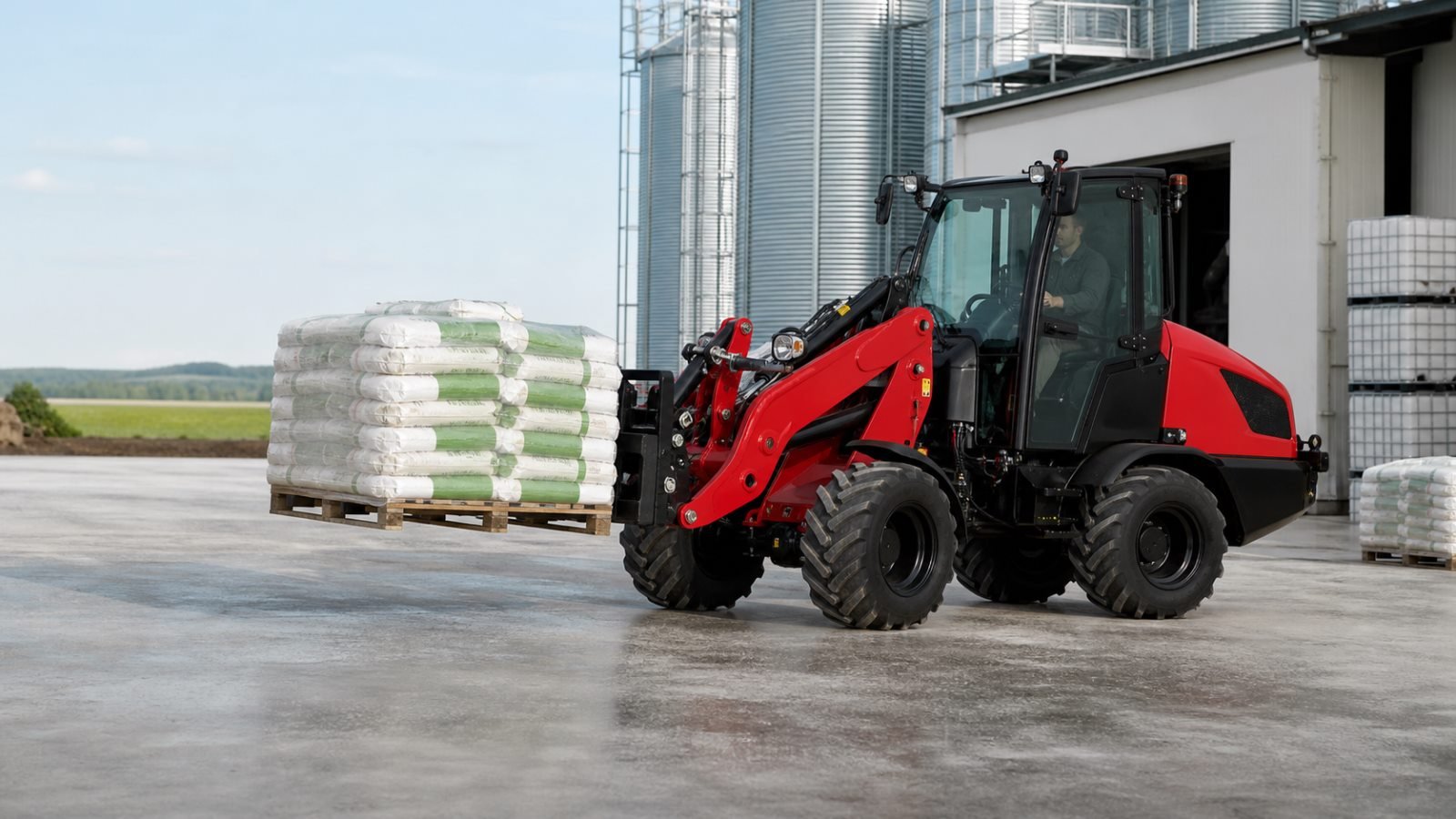
Mini wheel loaders combine articulated maneuverability with buckets, forks and task-specific attachments. Correct selection depends on real payload, material density, access width, lift geometry, surface and hydraulic requirements rather than machine size alone.
Relevant MERI Equipment and Resources
500 kg diesel mini wheel loader
1,200 kg compact wheel loader
400 kg electric mini loader
800 kg electric compact loader
Technical Points to Confirm
| Access and maneuvering | Measure the narrowest gate, aisle, doorway and overhead restriction. Confirm machine width, height and turning envelope with the intended attachment. |
|---|---|
| Payload and bucket | Use material density, bucket volume and fill factor to estimate payload. Check fork load center separately. |
| Lift geometry | Confirm hinge-pin height, dump clearance, reach at full lift and rollback for the receiving vehicle or storage point. |
| Ground and tires | Define concrete, gravel, turf, mud, gradients and seasonal conditions to balance traction and surface protection. |
| Attachments | Match coupler, attachment mass, auxiliary flow, pressure, return circuit and control functions. |
Information to Include with an Inquiry
- Maximum real load and material density
- Minimum site clearances
- Required dump or lift height
- Surface and gradients
- Daily cycles and travel distance
- Bucket, fork, grapple or sweeper requirements
Request an Application-Based Recommendation
Review the related MERI guide, then send your application, site conditions, configuration requirements and destination through the technical quotation form.
This page supports preliminary selection. Final specifications, capacity, compatibility, service intervals and destination documentation are confirmed for the selected machine and configuration.
Technical Library
Buyer Guides & Application Resources
Use these practical guides to compare configurations, prepare an RFQ and plan operation or maintenance.