
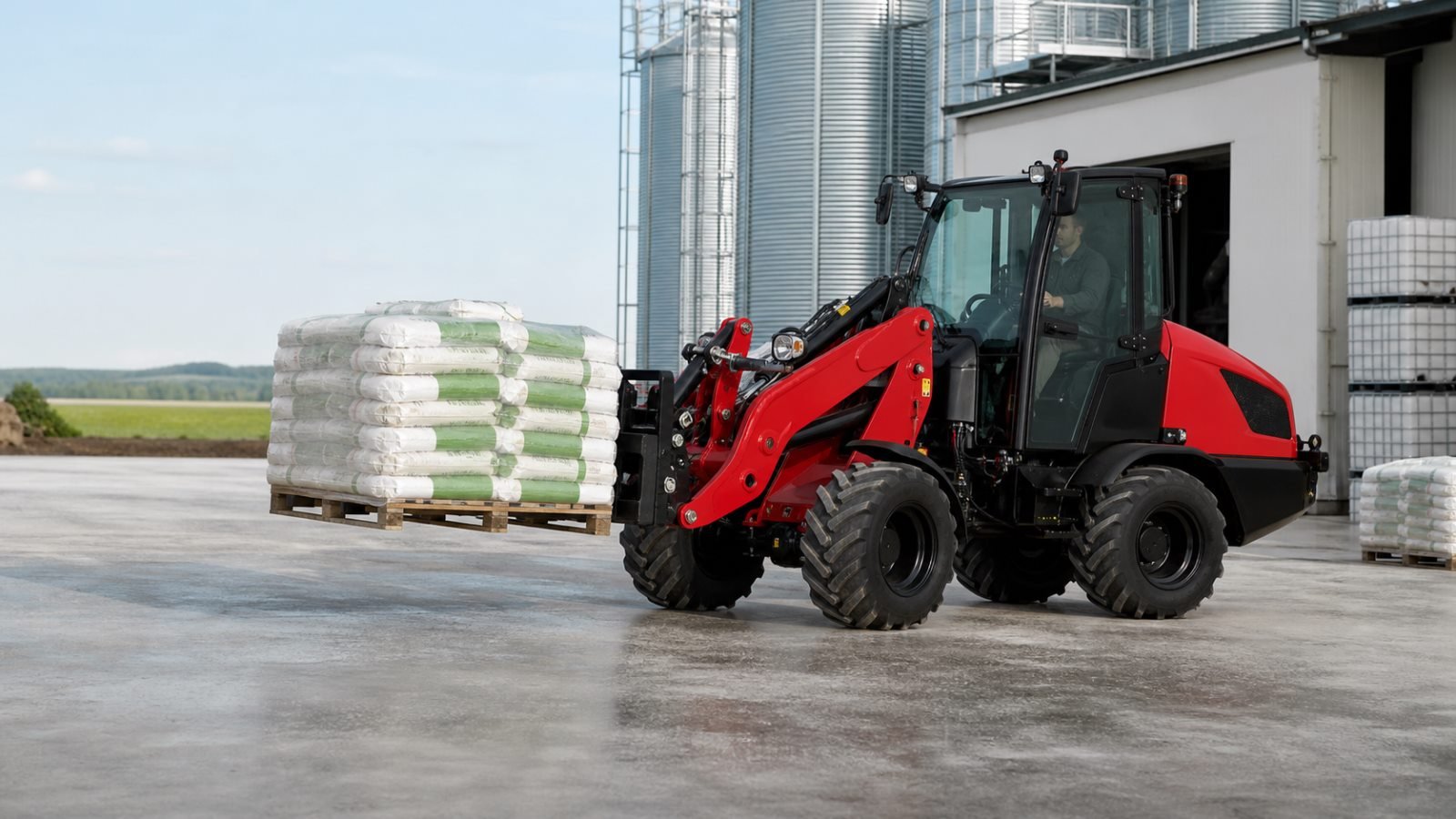
Rough-Terrain Material Handling – MERI Buyer Resource
How to Choose an Off-Road Forklift for Farm and Construction Sites
An off-road forklift is selected for the complete load cycle, not by nominal tonnage alone. Buyers should document the heaviest load, load center, lift height, surface condition, gradients, aisle width and transport restrictions before comparing machines.
Technical Factors to Confirm
| Decision area | What the buyer should verify |
|---|---|
| Rated capacity | Use the real load weight and load center. Capacity normally decreases as the load center moves forward or attachments are added. |
| Lift height | Confirm the required fork height and request the applicable capacity information at that height. |
| Terrain | Describe mud, gravel, compacted soil, slopes and seasonal conditions; these affect tires, traction and stability. |
| Machine envelope | Check overall width, turning radius, mast height and lowered height against gates, barns and containers. |
| Attachments | Side shift, fork positioners and other tools change weight, load center and hydraulic requirements. |
Common Buying Mistakes
Incomplete application data
Suppliers cannot select responsibly when load, terrain, dimensions, work cycle and attachments are missing.
Headline-number comparison
A single capacity, width or power figure rarely explains stability, productivity, compatibility or operating cost.
- Comparing only the 2.5-ton or 3-ton model label
- Ignoring the load center and attachment weight
- Assuming road tires will work in deep or wet ground
- Failing to confirm container loading and destination transport limits
Information to Send With Your RFQ
- Maximum load weight and dimensions
- Normal and maximum lift height
- Surface type, slope and seasonal ground condition
- Minimum aisle, gate and overhead clearance
- Fork length and required attachments
- Destination emissions, documentation and local compliance
- Expected annual hours and spare-parts plan
When possible, include dimensioned site sketches, load photographs, terrain video and the destination country. MERI can then compare the relevant models, identify configuration questions and prepare a technical offer that is easier to review internally.
Buyer FAQ
Is a 2.5-ton off-road forklift enough for a 2.5-ton load?
Not automatically. Capacity depends on load center, lift height, mast, attachment and operating condition. Request confirmation for the actual load case.
What information is needed for tire selection?
Ground surface, mud depth, gradients, travel distance, puncture risk and the balance between traction and ground protection.
Can an off-road forklift replace a telescopic loader?
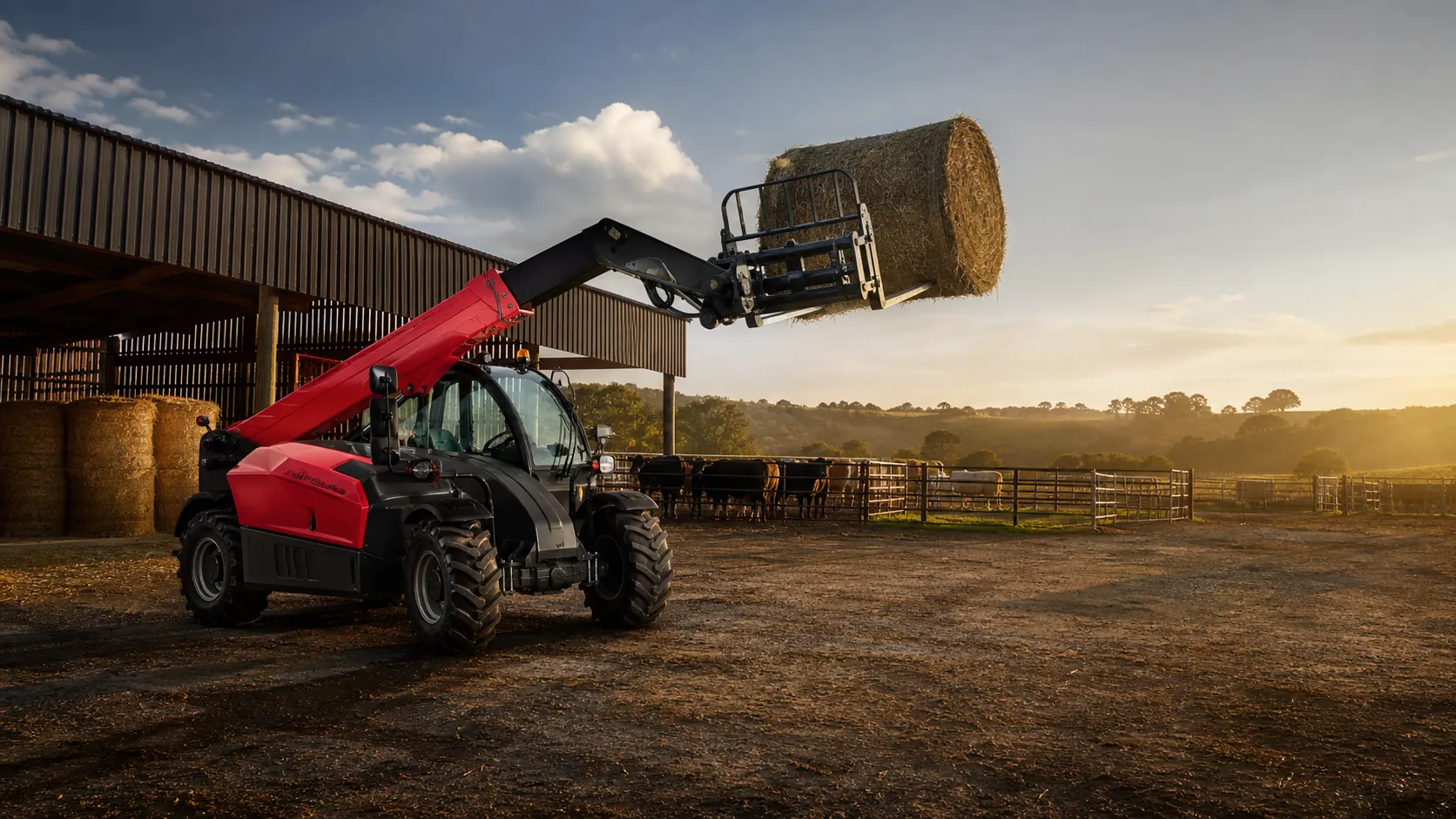
They overlap in some handling work, but telescopic loaders provide forward reach and different lift geometry. Choose by placement height, reach and work cycle.
Build a Configuration for Your Application
Review the related MERI equipment and solution page, or send your work requirements for a model recommendation and quotation.
This guide supports preliminary product selection. Final capacity, dimensions, performance, compatibility, compliance and supplied documents depend on the confirmed model and order configuration.