
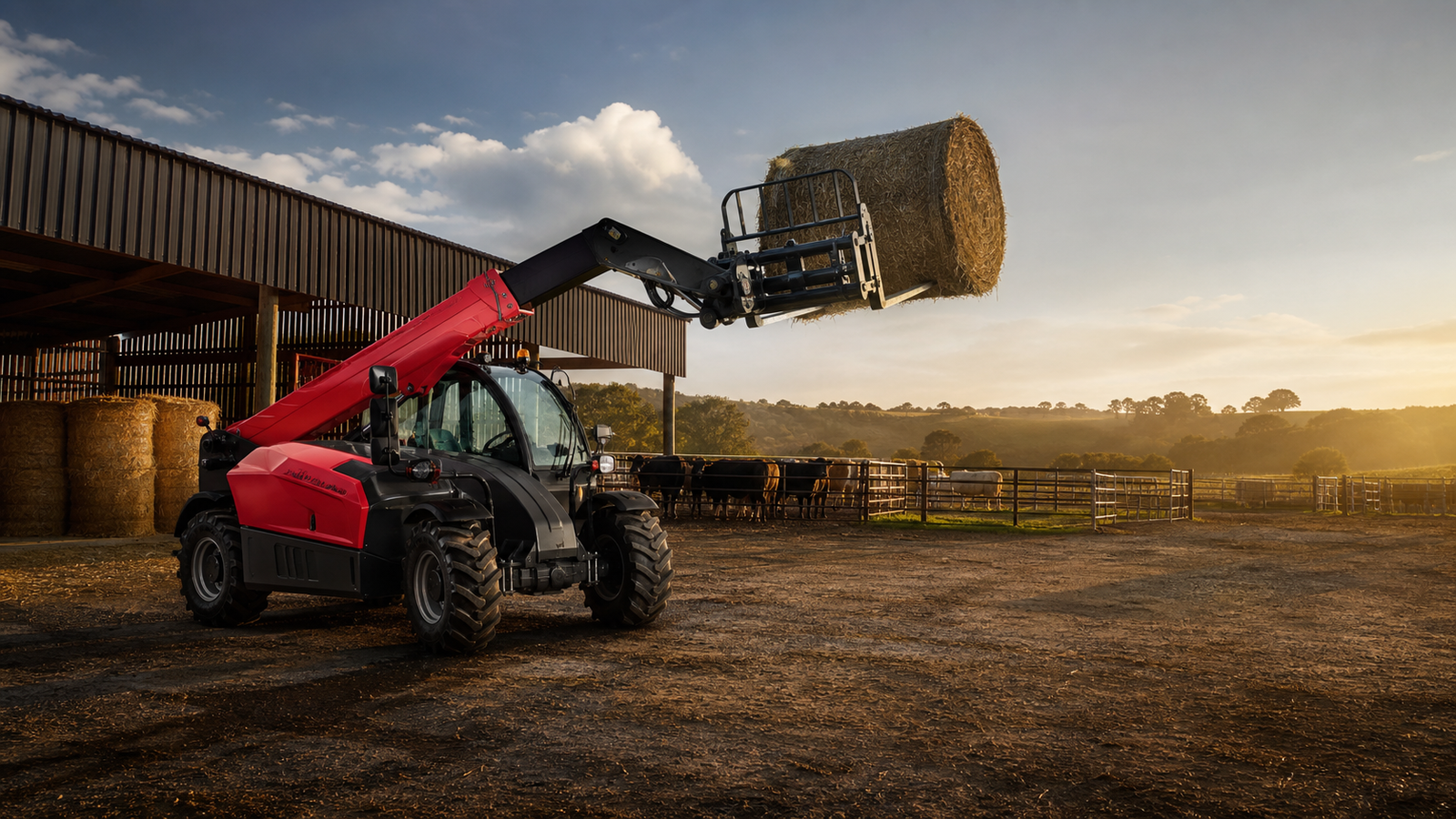
Lift and Placement Planning – MERI Buyer Resource
Telescopic Loader Buying Guide: Capacity, Lift Height and Reach
The headline lifting class of a telescopic loader does not describe every working position. The decisive document is the load chart for the confirmed boom, carriage, tires, stabilizers and attachment configuration.
Technical Factors to Confirm
| Decision area | What the buyer should verify |
|---|---|
| Load chart | Verify permitted load at the required height and forward reach, not only at the fully retracted boom position. |
| Placement geometry | Measure the obstacle, required reach beyond it, receiving height and space available for machine positioning. |
| Stability | Ground condition, tire pressure, slope, steering mode and stabilizers can change safe operation. |
| Attachment interface | Confirm carriage type, attachment mass, hydraulic flow and locking method. |
| Visibility and control | Review cab visibility, camera options, boom control and operator aids for the intended cycle. |
Common Buying Mistakes
Incomplete application data
Suppliers cannot select responsibly when load, terrain, dimensions, work cycle and attachments are missing.
Headline-number comparison
A single capacity, width or power figure rarely explains stability, productivity, compatibility or operating cost.
- Treating maximum lift capacity as available through the full boom range
- Selecting only by maximum lift height
- Leaving attachment weight out of the calculation
- Using a generic load chart from a different configuration
Information to Send With Your RFQ
- Maximum real load and load-center distance
- Required vertical height and forward reach
- Obstacle dimensions and machine standing position
- Ground bearing condition and gradients
- Forks, bucket, bale or grapple requirements
- Transport height, width and total weight
- Required manuals, load chart and inspection records
When possible, include dimensioned site sketches, load photographs, terrain video and the destination country. MERI can then compare the relevant models, identify configuration questions and prepare a technical offer that is easier to review internally.
Buyer FAQ
Why does telescopic loader capacity decrease with reach?
Extending the load forward increases the overturning moment. The applicable load chart defines the permitted load for each boom position.
Should I choose the highest available lift class?
Not necessarily. A correctly sized machine can be easier to transport and maneuver. Use the actual load cycle and load chart.
What must be confirmed for a bale attachment?
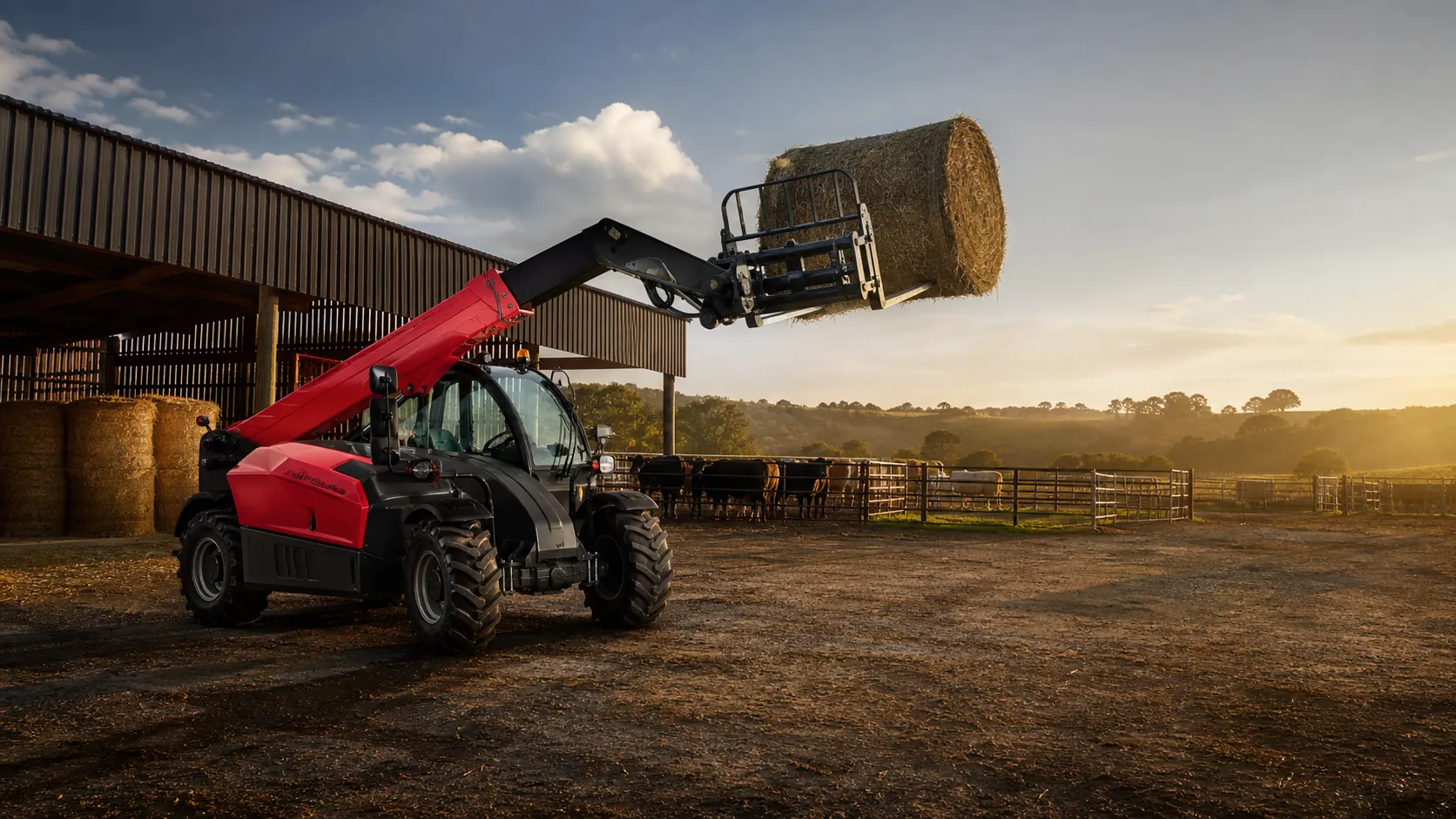
Bale weight and dimensions, attachment mass, center of gravity, hydraulic functions and the stacking height and reach.
Build a Configuration for Your Application
Review the related MERI equipment and solution page, or send your work requirements for a model recommendation and quotation.
This guide supports preliminary product selection. Final capacity, dimensions, performance, compatibility, compliance and supplied documents depend on the confirmed model and order configuration.