
Specialty Crop Equipment – MERI Buyer Resource
Orchard and Vineyard Machinery Selection Checklist
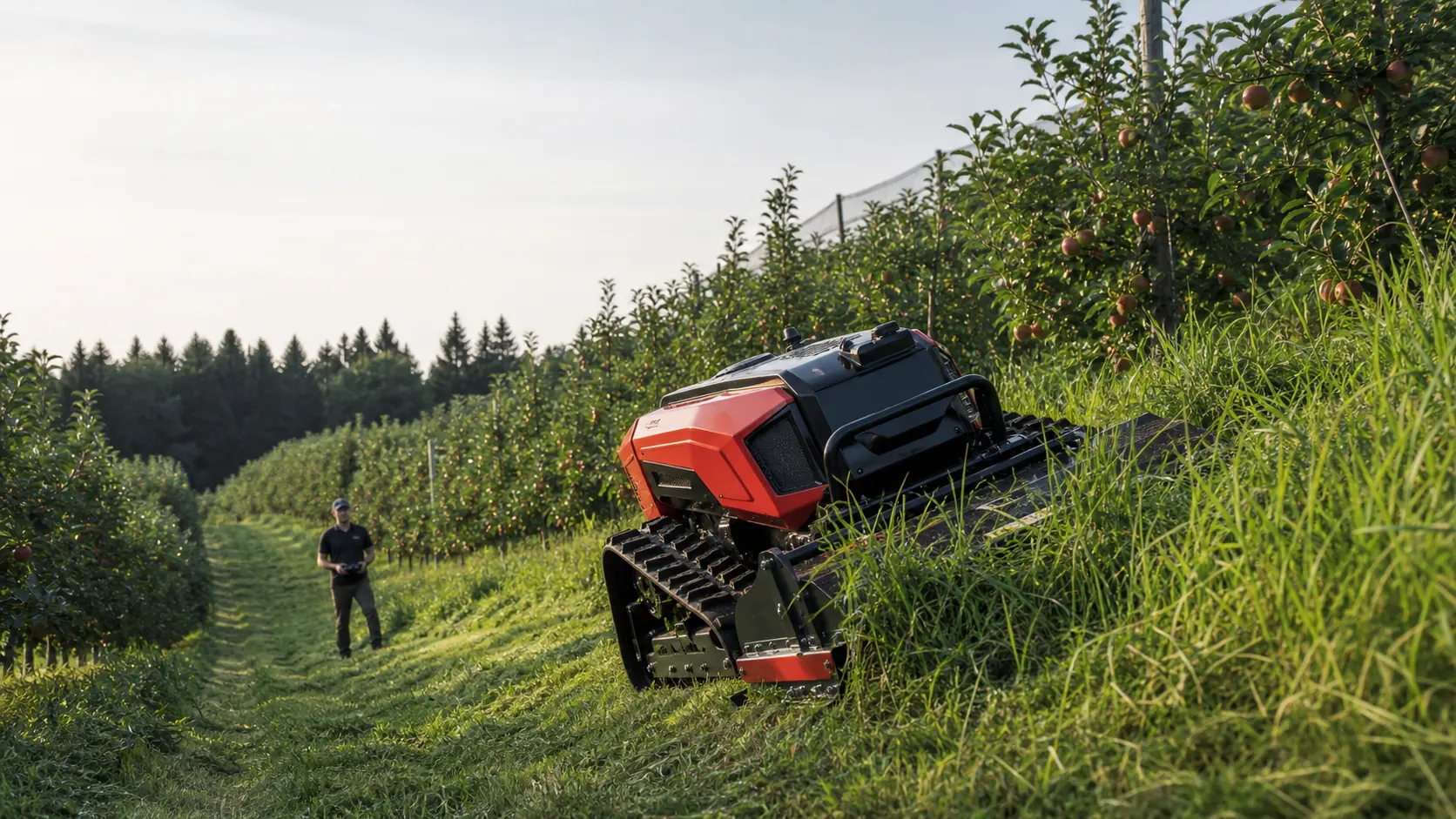
Orchards and vineyards create a three-dimensional machine envelope: row width at ground level, canopy width above the machine, headland turning space and slope all matter. A useful equipment plan also separates year-round handling from seasonal tillage, spraying and mowing.
Technical Factors to Confirm
| Decision area | What the buyer should verify |
|---|---|
| Access envelope | Measure the narrowest row, gate and headland plus branch and trellis clearance at operating height. |
| Ground and slope | Map wet zones, cross-slopes, terraces, erosion risk and the surface conditions after rain. |
| Crop protection | Match tank, boom or nozzle arrangement to crop geometry, coverage target and approved local practice. |
| Soil work | Choose tillage width and depth from soil type, root-zone protection, row spacing and available traction. |
| Material handling | Define pallet, bin, compost, pruning and maintenance tasks for loaders and attachments. |
Common Buying Mistakes
Incomplete application data
Suppliers cannot select responsibly when load, terrain, dimensions, work cycle and attachments are missing.
Headline-number comparison
A single capacity, width or power figure rarely explains stability, productivity, compatibility or operating cost.
- Using nominal row spacing instead of the narrowest real clearance
- Forgetting low branches and trellis hardware
- Selecting spraying equipment without crop geometry
- Buying separate machines without checking shared transport and service needs
Information to Send With Your RFQ
- Minimum row, gate and canopy clearances
- Headland length and turning restriction
- Maximum slope and wet-ground condition
- Crop, canopy and spraying objective
- Soil type and required tillage depth
- Bins, pallets and material weights
- Seasonal calendar and dealer service plan
When possible, include dimensioned site sketches, load photographs, terrain video and the destination country. MERI can then compare the relevant models, identify configuration questions and prepare a technical offer that is easier to review internally.
Buyer FAQ
How much clearance should a machine have in a row?
Allow operating and steering margin beyond the machine width. The required margin depends on row straightness, canopy, slope and operator visibility.
Can one compact loader handle most orchard tasks?
A loader can cover many handling and attachment jobs, but spraying, tillage and mowing may need specialized systems.
Why provide site photos with dimensions?
Images help explain canopy, trellis, terrain and obstacles, while measurements prevent visual scale errors.
Build a Configuration for Your Application
Review the related MERI equipment and solution page, or send your work requirements for a model recommendation and quotation.
This guide supports preliminary product selection. Final capacity, dimensions, performance, compatibility, compliance and supplied documents depend on the confirmed model and order configuration.