Lift Height and Forward Reach · MERI Machinery
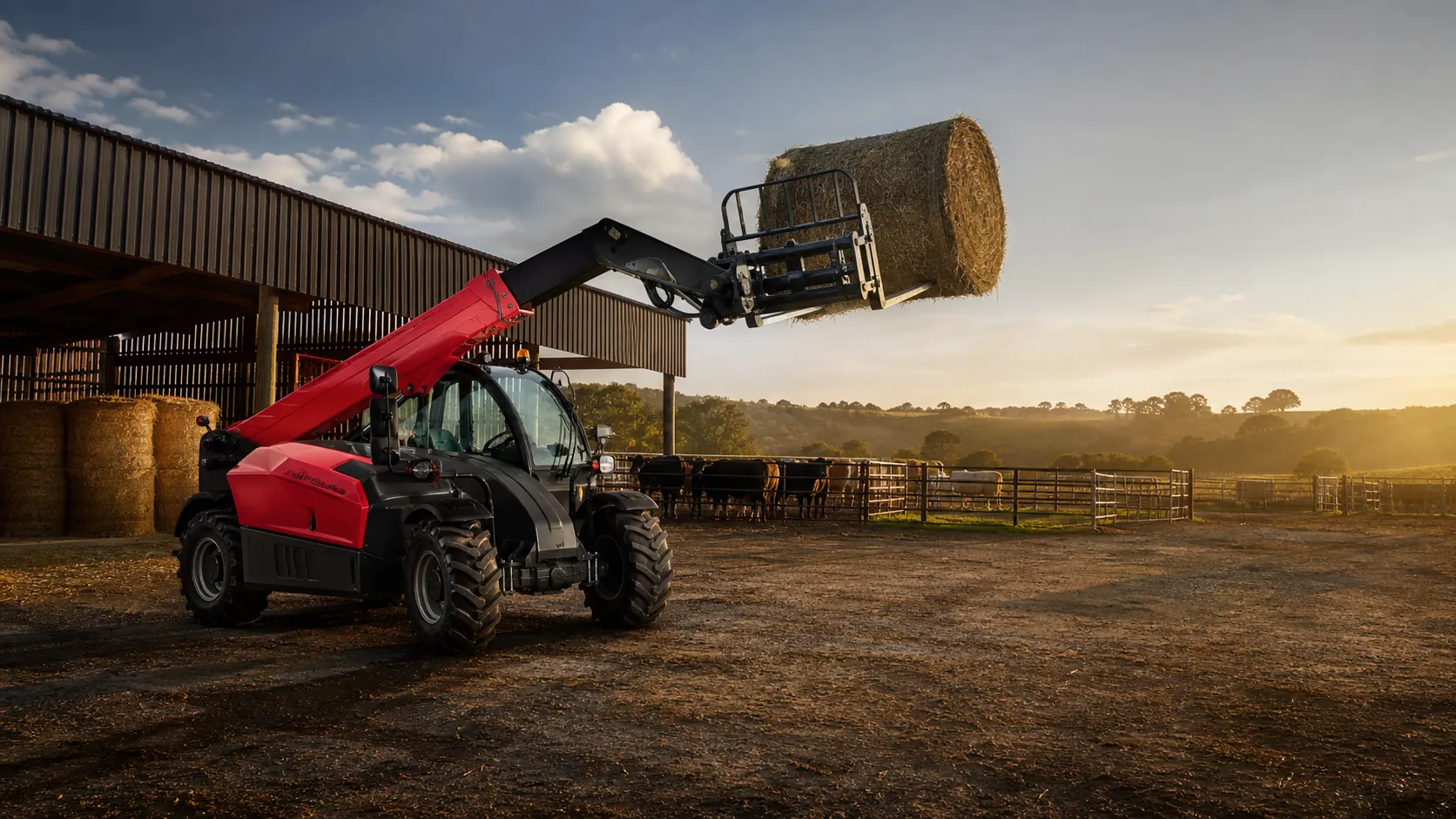
Telescopic loaders are chosen from the real placement geometry, not maximum capacity alone. The configuration-specific load chart must support the required load at the necessary height and forward reach.
Relevant MERI Equipment and Resources
ME-TL1500-D
1,500 kg lift class
ME-TL2500-D
2,500 kg lift class
ME-TL3000-D
3,000 kg lift class
ME-TL3500-D
3,500 kg lift class
Technical Points to Confirm
| Placement geometry | Measure receiving height, obstacle width, required reach and machine standing position. |
|---|---|
| Load chart | Verify permitted load for the confirmed boom, carriage, tires, stabilizers and attachment. |
| Attachment mass | Forks, bale tools, buckets and grapples change center of gravity and residual capacity. |
| Ground condition | Slope, bearing pressure, tire inflation and stabilizer support affect safe operation. |
| Transport | Confirm operating weight, overall dimensions and any disassembly for destination transport. |
Information to Include with an Inquiry
- Maximum load and dimensions
- Required lift height
- Required forward reach
- Obstacle and standing-position drawing
- Ground and gradients
- Fork, bale, bucket or grapple attachment
Request an Application-Based Recommendation
Review the related MERI guide, then send your application, site conditions, configuration requirements and destination through the technical quotation form.
This page supports preliminary selection. Final specifications, capacity, compatibility, service intervals and destination documentation are confirmed for the selected machine and configuration.