
Carrier and Tool Matching – MERI Buyer Resource
Wheel Loader Attachment Compatibility Guide
An attachment is part of the loader working system. Coupler geometry alone is not enough: attachment mass, center of gravity, rated load, auxiliary hydraulic flow, pressure, return line, electrical controls and visibility all require confirmation.
Technical Factors to Confirm
| Decision area | What the buyer should verify |
|---|---|
| Bucket | Match material density, bucket volume, width, cutting edge and rollback clearance to the loader capacity. |
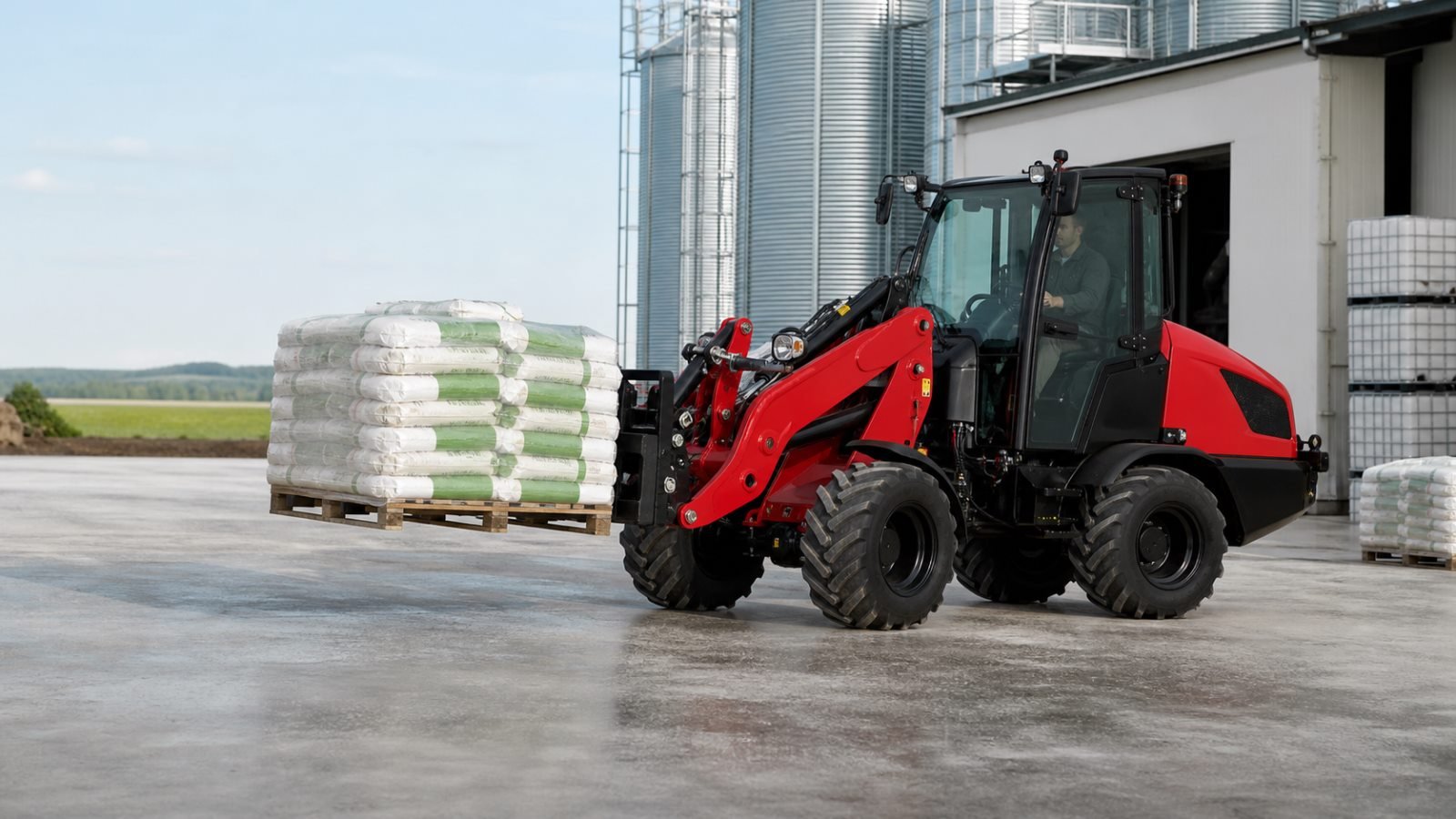
| Pallet forks | Confirm fork length, carriage width, load center and residual capacity at the required height. |
| Grapple | Check jaw geometry, hydraulic function, hose routing and the size and density of logs, grass or bales. |
| Sweeper | Confirm working width, hydraulic flow, debris collection method, side brush and dust-control needs. |
| Snow tool or auger | Review flow, pressure, coupler torque reaction, terrain and guarding for the specific task. |
Common Buying Mistakes
Incomplete application data
Suppliers cannot select responsibly when load, terrain, dimensions, work cycle and attachments are missing.
Headline-number comparison
A single capacity, width or power figure rarely explains stability, productivity, compatibility or operating cost.
- Ordering by photograph or coupler name only
- Ignoring the attachment center of gravity
- Assuming every auxiliary circuit has the same flow and pressure
- Failing to define hose, connector and electrical-control standards
Information to Send With Your RFQ
- Exact carrier model and serial/configuration reference
- Coupler drawing and locking method
- Attachment weight, width and center of gravity
- Required hydraulic flow and maximum pressure
- Number of hydraulic functions and return-line requirement
- Connector, electrical and control interface
- Material density and intended work cycle
When possible, include dimensioned site sketches, load photographs, terrain video and the destination country. MERI can then compare the relevant models, identify configuration questions and prepare a technical offer that is easier to review internally.
Buyer FAQ
Can a physically fitting attachment still be unsafe?
Yes. It may exceed machine capacity, change stability, obstruct visibility or require incompatible hydraulic flow and pressure.
Why does bucket volume need material density?
A large bucket filled with dense material can exceed the machine limit even when the bucket itself fits the carrier.
What should be included in an attachment quotation?
Carrier compatibility, dimensions, mass, coupler, hydraulic requirements, included hoses/connectors and the confirmed application.
Build a Configuration for Your Application
Review the related MERI equipment and solution page, or send your work requirements for a model recommendation and quotation.
This guide supports preliminary product selection. Final capacity, dimensions, performance, compatibility, compliance and supplied documents depend on the confirmed model and order configuration.