
Low-Emission Compact Handling · MERI Machinery
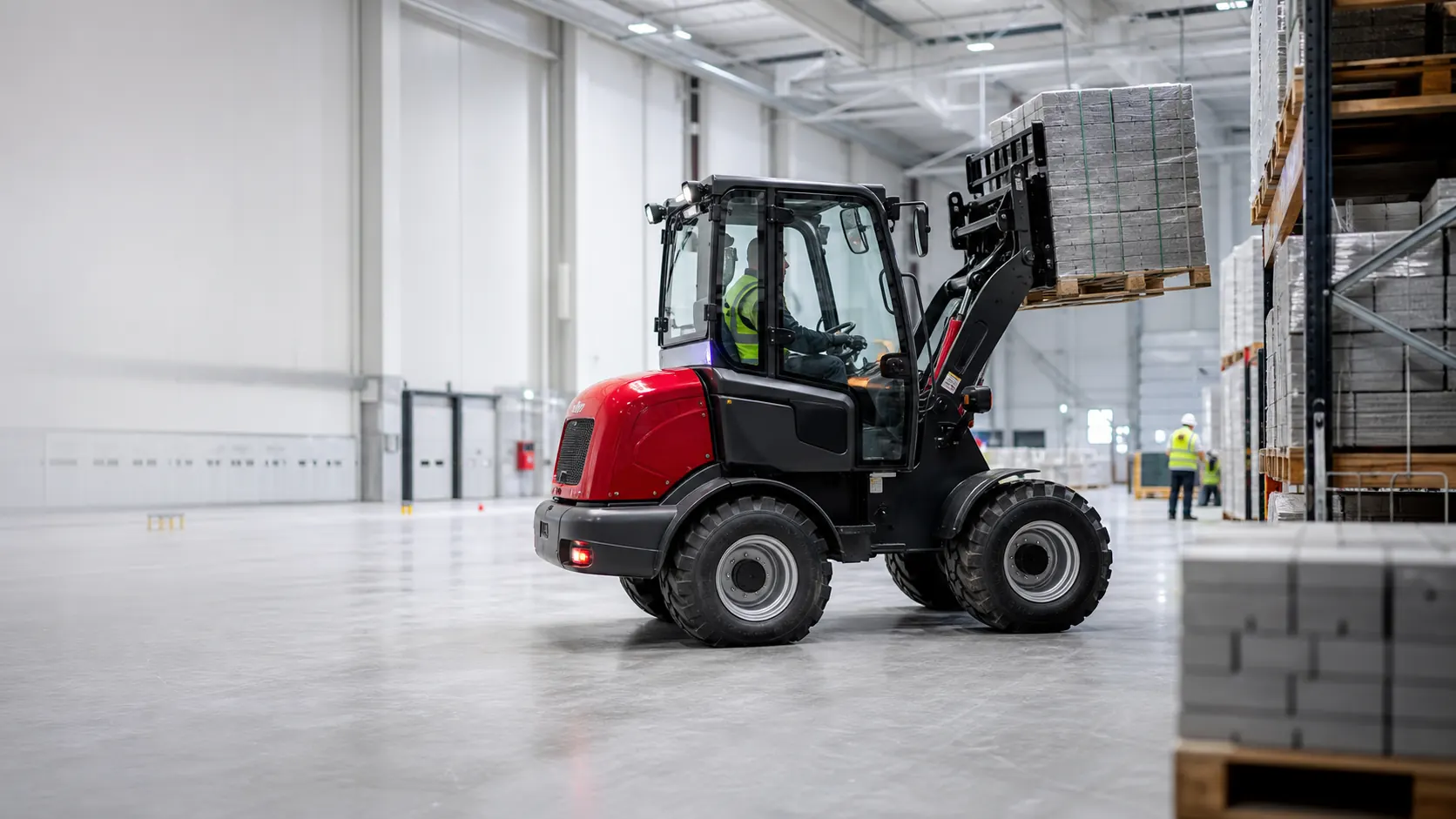
Electric mini loaders are selected as a complete site system: payload, aisle width, lift geometry, floor condition, battery duty cycle, charging supply, temperature and hydraulic attachment demand all affect practical suitability.
Relevant MERI Equipment and Resources
ME-EL0400-E
400 kg electric mini loader
ME-EL0800-E
800 kg electric compact loader
ME-EL1000-E
1,000 kg electric wheel loader
Duty-cycle guide
Battery, charger and shift planning
Technical Points to Confirm
| Real duty cycle | Record loaded travel, empty travel, lift cycles, gradients, idle time and continuous hydraulic use. |
|---|---|
| Charging supply | Confirm voltage, phase, frequency, connector, breaker capacity and available charging windows. |
| Indoor envelope | Measure aisles, doors, overhead clearances, floor loading and ventilation or dust constraints. |
| Battery environment | Review temperature, storage, charging location and contingency for peak shifts. |
| Attachment energy | Sweepers and other continuous-flow tools can consume more energy than intermittent bucket work. |
Information to Include with an Inquiry
- Hours and shifts per day
- Loads and lift cycles
- Travel distance and gradients
- Minimum building clearances
- Site electrical supply
- Attachments and continuous hydraulic demand
Request an Application-Based Recommendation
Review the related MERI guide, then send your application, site conditions, configuration requirements and destination through the technical quotation form.
This page supports preliminary selection. Final specifications, capacity, compatibility, service intervals and destination documentation are confirmed for the selected machine and configuration.