Loader Bucket Engineering · MERI Machinery
Bucket volume must be matched with material density, fill factor, machine capacity, lift geometry and the work cycle. A physically larger bucket can reduce productivity when dense material overloads the carrier or slows loading.
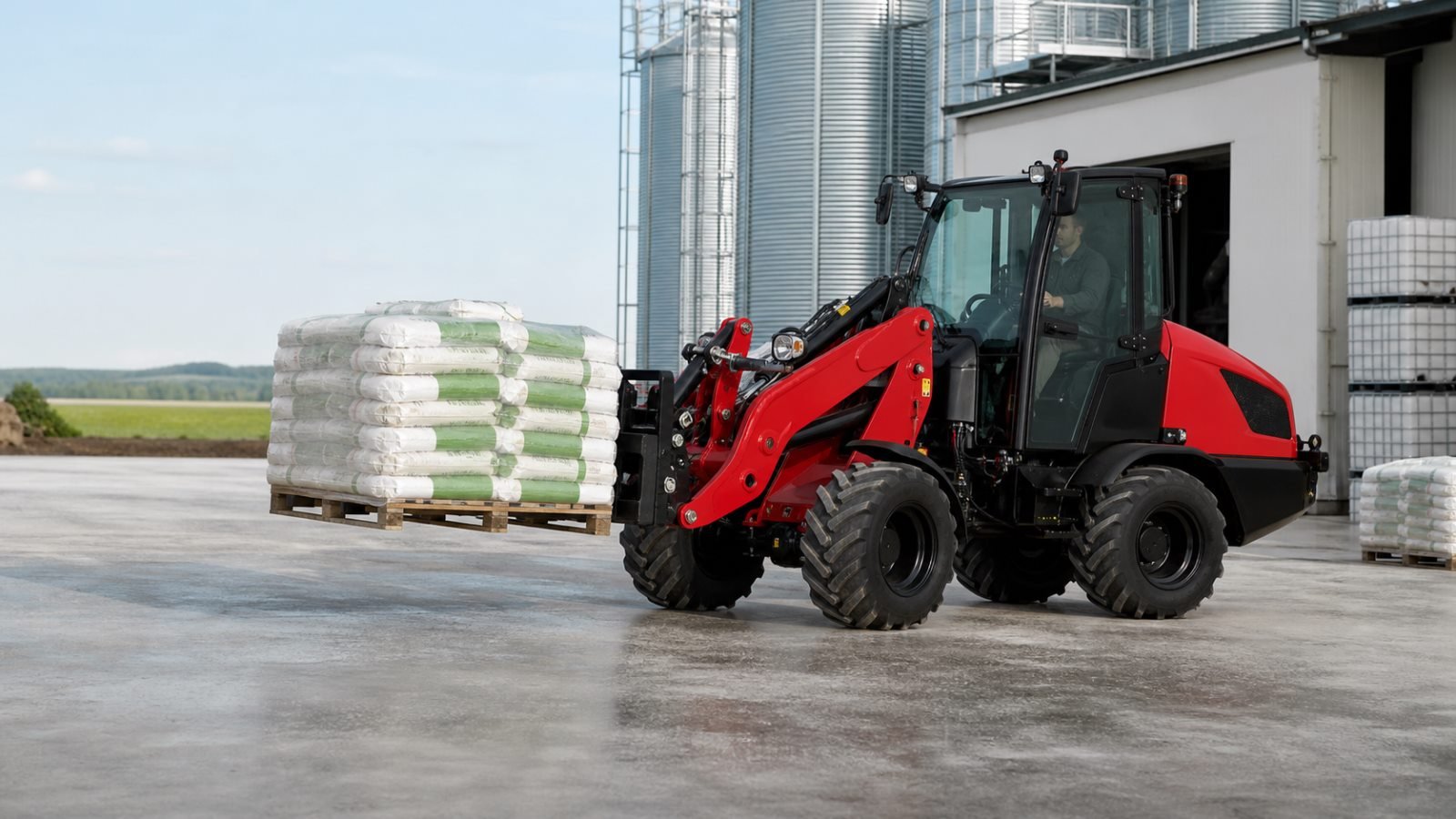
Relevant MERI Equipment and Resources
Mixed loading and handling applications
Higher volume for low-density material
Reduced volume and reinforced wear system for dense aggregate
Carrier and tool compatibility planning
Technical Points to Confirm
| Material density | Use loose bulk density and expected moisture, not only the material name. |
|---|---|
| Fill factor | Real bucket fill changes with particle size, pile condition, operator technique and bucket geometry. |
| Payload | Estimated material mass must stay within the confirmed machine and stability limits. |
| Geometry | Review bucket width, pin or coupler interface, rollback, dump angle, clearance and cutting edge. |
| Wear protection | Select edge, teeth, side protection and reinforcement from abrasiveness and impact. |
Information to Include with an Inquiry
- Material and loose density
- Moisture and particle size
- Target bucket volume
- Carrier model and coupler
- Receiving height and clearance
- Wear edge or teeth preference
Request an Application-Based Recommendation
Review the related MERI guide, then send your application, site conditions, configuration requirements and destination through the technical quotation form.
This page supports preliminary selection. Final specifications, capacity, compatibility, service intervals and destination documentation are confirmed for the selected machine and configuration.