
Loader Capacity Fundamentals · MERI Machinery
Rated load, tipping load and material payload describe different aspects of loader performance. Buyers should use configuration-specific manufacturer data and consider bucket center of gravity, material density, lift position, tires and attachments.
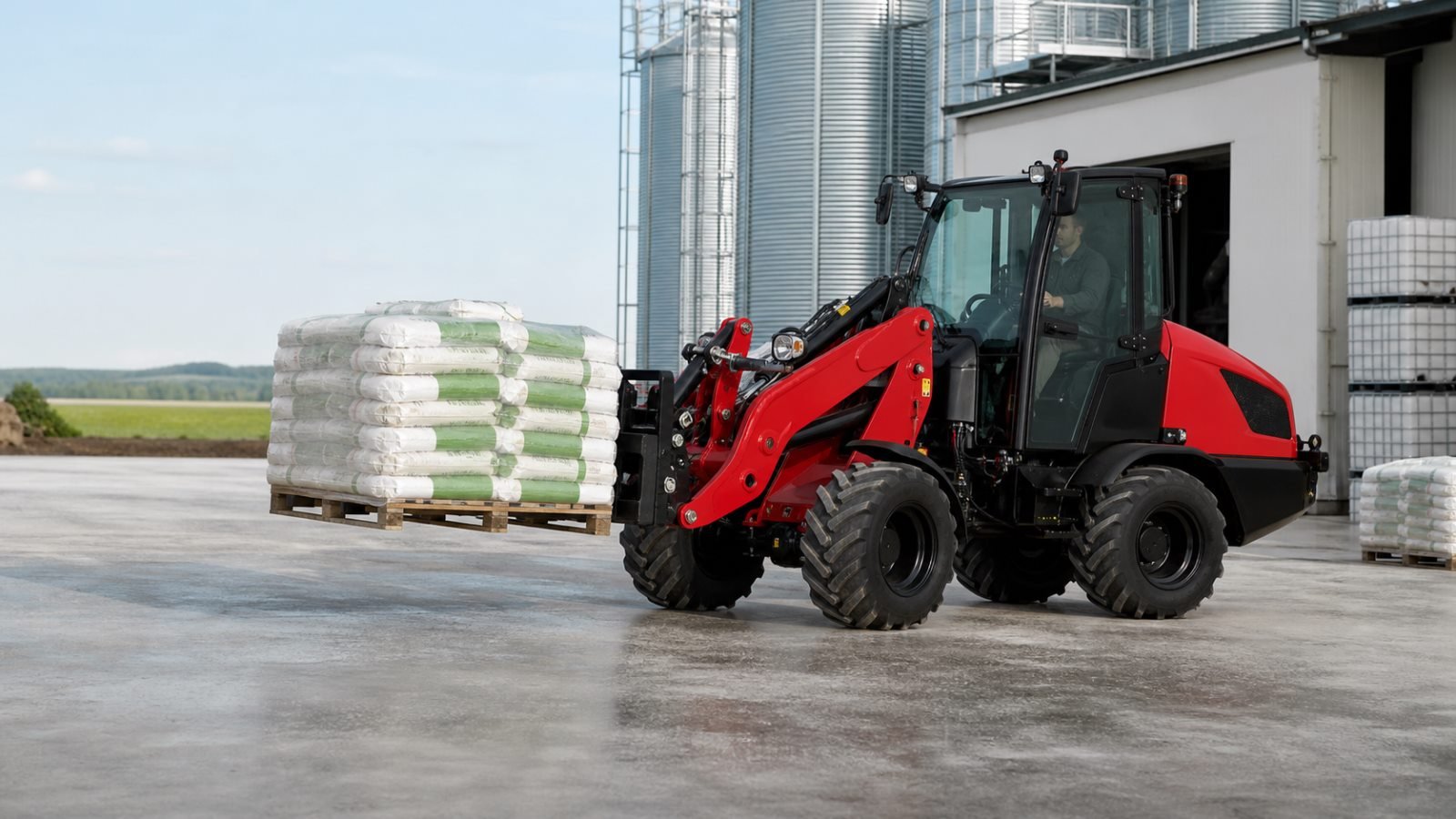
Relevant MERI Equipment and Resources
Manufacturer-defined operating load reference
Stability reference under specified test configuration
Bucket volume multiplied by density and fill factor
Load center and residual capacity govern placement
Technical Points to Confirm
| Configuration matters | Tires, counterweight, bucket, coupler and attachment change mass distribution. |
|---|---|
| Lift position | Stability and hydraulic capacity can vary across the lift path and steering position. |
| Material estimate | Use loose density, moisture and realistic fill factor to estimate bucket mass. |
| Dynamic operation | Travel, braking, turning, slopes and uneven ground add forces not represented by a static label. |
| Technical confirmation | Request the applicable data and safe operating information for the ordered configuration. |
Information to Include with an Inquiry
- Loader and configuration
- Bucket volume and weight
- Material density and moisture
- Fork load center if applicable
- Ground and gradients
- Required lift and dump geometry
Request an Application-Based Recommendation
Review the related MERI guide, then send your application, site conditions, configuration requirements and destination through the technical quotation form.
This page supports preliminary selection. Final specifications, capacity, compatibility, service intervals and destination documentation are confirmed for the selected machine and configuration.