
Load Center and Residual Capacity · MERI Machinery
Pallet forks are selected from load weight, dimensions, load center, fork length, carriage width, lift height and carrier residual capacity. A fork attachment changes the center of gravity and cannot be evaluated from rated loader capacity alone.
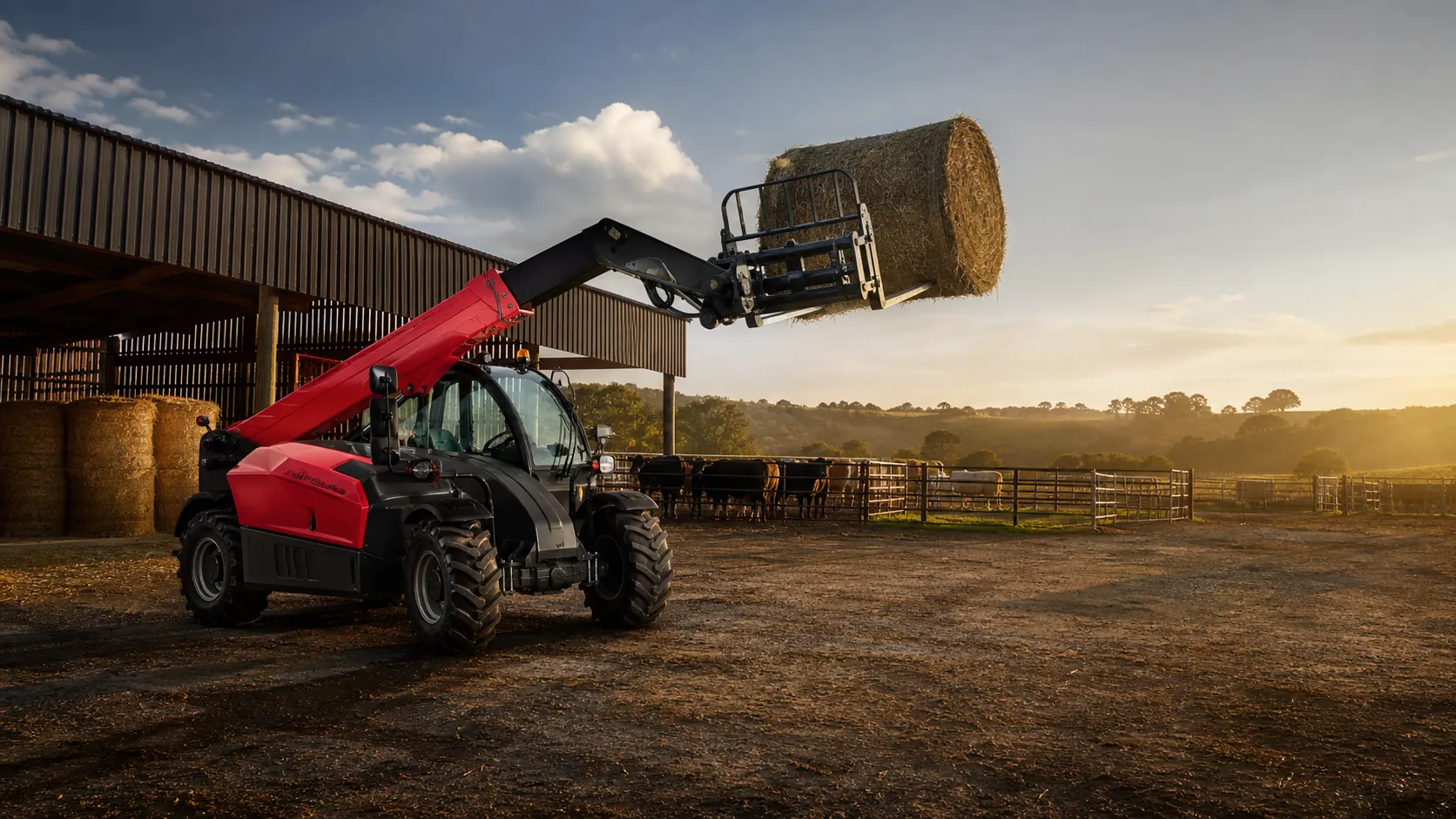
Relevant MERI Equipment and Resources
Compact carrying and loading applications
Elevated placement and forward reach
Dedicated rough-terrain pallet handling
Attachment mass, coupler and capacity review
Technical Points to Confirm
| Load center | Provide load depth and center of gravity, including irregular or overhanging loads. |
|---|---|
| Fork length | Support the load correctly without creating unnecessary forward leverage. |
| Carriage | Confirm width, class, locking, backrest and fork-position adjustment. |
| Residual capacity | Use the applicable machine or load chart at the required height and reach. |
| Visibility | Review load, carriage and fork-tip visibility during pickup, travel and placement. |
Information to Include with an Inquiry
- Maximum load weight
- Load dimensions and center
- Required fork length
- Lift height and forward reach
- Carrier and coupler
- Side-shift or fork-positioning requirement
Request an Application-Based Recommendation
Review the related MERI guide, then send your application, site conditions, configuration requirements and destination through the technical quotation form.
This page supports preliminary selection. Final specifications, capacity, compatibility, service intervals and destination documentation are confirmed for the selected machine and configuration.