Capacity at Height and Reach · MERI Machinery
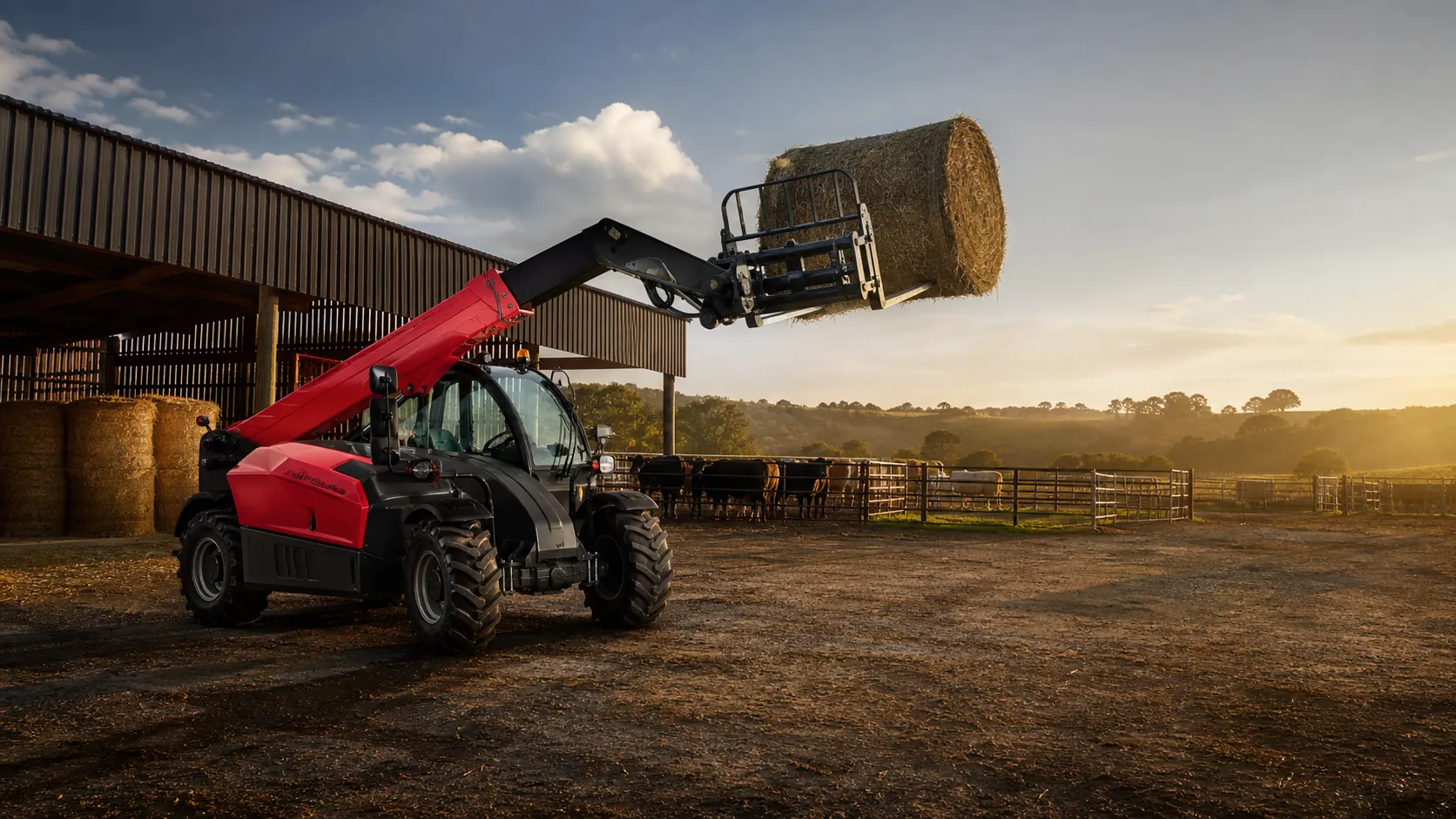
A telescopic loader load chart shows the permitted load for defined boom positions and machine configurations. Maximum capacity is generally not available at every height or forward reach, so the real placement point must be plotted before selection.
Relevant MERI Equipment and Resources
Permitted load region on the confirmed chart
Extension and angle define placement geometry
Carriage, forks and tools affect residual capacity
Tires, stabilizers and level condition must match the chart assumptions
Technical Points to Confirm
| Use the correct chart | Match exact machine, boom, carriage, attachment, tires and stabilizer configuration. |
|---|---|
| Locate the load point | Use required height and forward reach from the machine reference point defined by the manufacturer. |
| Include load center | Load dimensions and center of gravity can move the effective load farther forward. |
| Respect operating conditions | Slope, soft ground, wind, travel and dynamic movement require safe procedures beyond chart reading. |
| Confirm limits | Use the operating manual and trained operator; this page is not a substitute for the machine chart. |
Information to Include with an Inquiry
- Exact model and configuration
- Load weight and dimensions
- Load center
- Required height
- Required forward reach
- Ground, slope and stabilizer conditions
Request an Application-Based Recommendation
Review the related MERI guide, then send your application, site conditions, configuration requirements and destination through the technical quotation form.
This page supports preliminary selection. Final specifications, capacity, compatibility, service intervals and destination documentation are confirmed for the selected machine and configuration.